
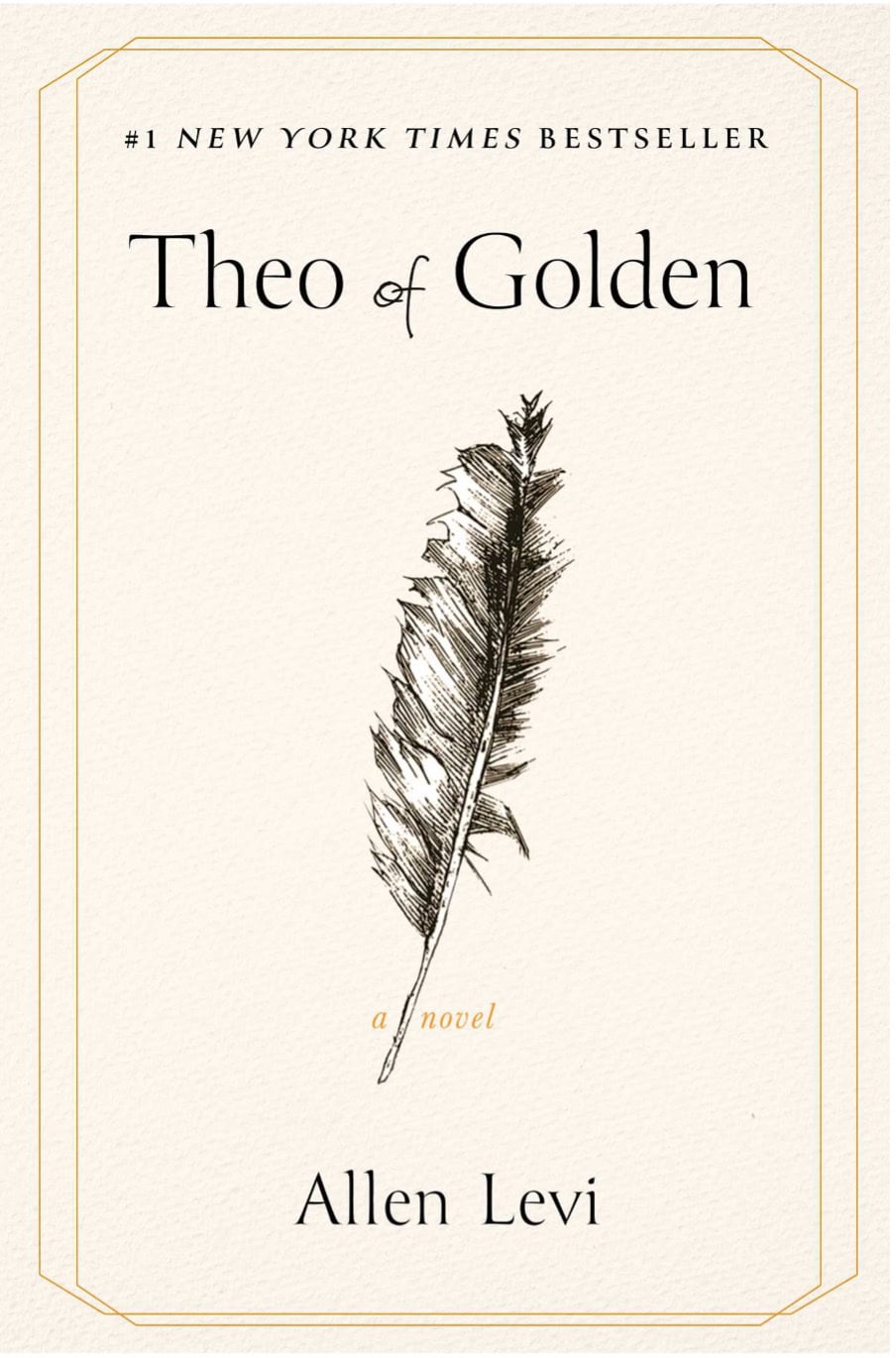
Theo of Golden
by Allen Levi
Expecting a sweet, simple story, I was both astonished and mesmerized by this remarkable, contemplative debut novel. I loathe spoilers so will attempt to keep the review brief. It’s character-driven, and to my mind, it’s best to gradually discover the story as it unfolds. Theo, an 86-year-old mysterious, very gracious gentleman, moves from NYC to Golden, Georgia. He visits the local coffee shop, where he observes 92 exquisite pencil drawings, all portraits. Intrigued, he inquiries why they have not been sold, since they’re all for sale. What ensues is Theo’s actions regarding the artwork.
How Theo gently touches the local residents’ hearts and lives in meaningful ways is breathtaking. If you wish to read about the importance and celebration in life of generosity, magnanimity, community, recognizing everyone has their own story, and are each unique individuals, this is a book you will appreciate. It slows a bit in the middle but persevere to the surprise ending. It is definitely worth it. I hope you will be as enraptured as I was. Sadly, some comments I heard consider the novel as naive and /or controversial, since the protagonist is male and Christianity is discussed.
From Levi’s website: Allen grew up in Columbus, Georgia, attended University of Georgia for degrees in English and Law, and worked as an attorney from 1980 to 1990. He left law practice for two years in 1990, moved to Scotland, and, while there, received a degree in Scottish fiction from the University of Edinburgh. He returned home, resumed law practice for three years, and finally ventured into vocational music in 1996. Since then, he has worked as a traveling musician, sharing his whimsical, thought-provoking brand of songwriting and storytelling to audiences across the U.S. He has over twenty albums to his credit, as well as hundreds of other unpublished songs.

Belgravia
by Julian Fellowes
If you enjoyed the Downton Abbey television series, this novel is a must read. Written by Julian Fellowes, the creator of Downton Abbey, it’s an historical, intriguing story set in the newly-developed ritzy London neighborhood of Belgravia, where the nouveau rich lived, and at present, it’s still an exclusive neighborhood.
The story opens in Brussels in 1815, at an opulent ball in full swing on the eve of what will be the Battle of Waterloo. Sophia Trenchard, a humble merchant’s daughter, is in love with Edmund Bellasis, an officer from an aristocratic and wealthy family, who plans to join his regiment for battle the next day. Many of the young men present at the ball will die in the fighting.
Sophia’s father is the ultimate social climber and hopes to become a member of the upper class in class conscious England. Her mother Anne, is practical, down to earth and is embarrassed by her husband’s crude behavior. The narrative “fast forwards” to 25 years later and the Trenchards are now rich, thanks to Mr. Trenchard’s determination. He is now a land developer who developed Belgravia. They are not included in “upper class society,” however. At that time in Victorian society, social mobility was unheard of, despite how rich someone was!
As you may know, dear readers, I absolutely loathe “spoilers.’ I rarely know the plots of most books I plan to read. Suffice it to say, the story will be more enjoyable for you to discover the plot as the story unfolds. If you recall the original PBS Upstairs, Downstairs television series and the Downton Abbey series, Belgravia is reminiscent of both. Class conflict, secrets, envy, moral values, and scandal are all part of the narrative, and there’s numerous twists in the storyline to keep readers guessing.
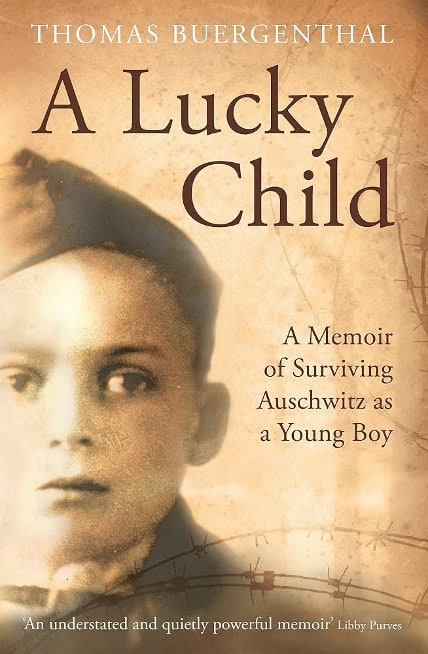
A Lucky Child: A Memoir of Surviving Auschwitz as a Young Boy
by Thomas Buergenthal
A beautifully written and incredibly touching memoir, the author, Thomas Buergenthal, relates how, as a child, he survived the Nazi Holocaust while living in concentration camps, and eventually became an International Court Judge at the Hague.
Thomas’ mother claimed throughout her life a famous fortuneteller she consulted before they fled their home, predicted he was “ein Glückskind” (a lucky child). She was absolutely right. For instance, when Thomas and his uncles were at the Birkenau concentration camp railway (also known as Auschwitz II), selections were underway regarding who would live and who would die. Nine-year-old Thomas told the commander in charge of selections, “Captain, I can work!” He was saved from imminent death and forced to perform hard labor. Most children there were murdered. The author does not dwell on the horrors of the camps; he simply states what his life was like and describes some of his experiences. Fortunately, many compassionate people took him “under their wing” and protected him. One Norwegian prisoner, after the War, later founded UNICEF. Also, after the end of the War a Polish division from the Soviet army returned him to Poland to look for his mother. Happily, he was reunited with her.
Readers, this isn’t a depressing story, although the entire Holocaust was a nightmare. Thomas triumphs despite the devastating hardships and challenges in this extraordinary narrative. It’s a profound meditation on living and surviving in the midst of tragedy.
From Wikipedia: Thomas Buergenthal (11 May 1934 – 29 May 2023) was a Czechoslovak-born American international lawyer, scholar, law school dean, and judge of the International Court of Justice (ICJ). He resigned his ICJ post as of 6 September 2010[1] and returned to his position at The George Washington University Law School[2] where he was the Lobingier Professor Emeritus of Comparative Law and Jurisprudence.[3]
NOTE: My father served in the U.S. Army during WWII, participated in D Day in 1944, and was present when Birkenau concentration camp was liberated in 1945.
Adult book reviews are by Susanne Dominguez.